
PREGNANCY AYURVEDIC DIET GUIDE
AYURVEDIC PRECONCEPTION CARE
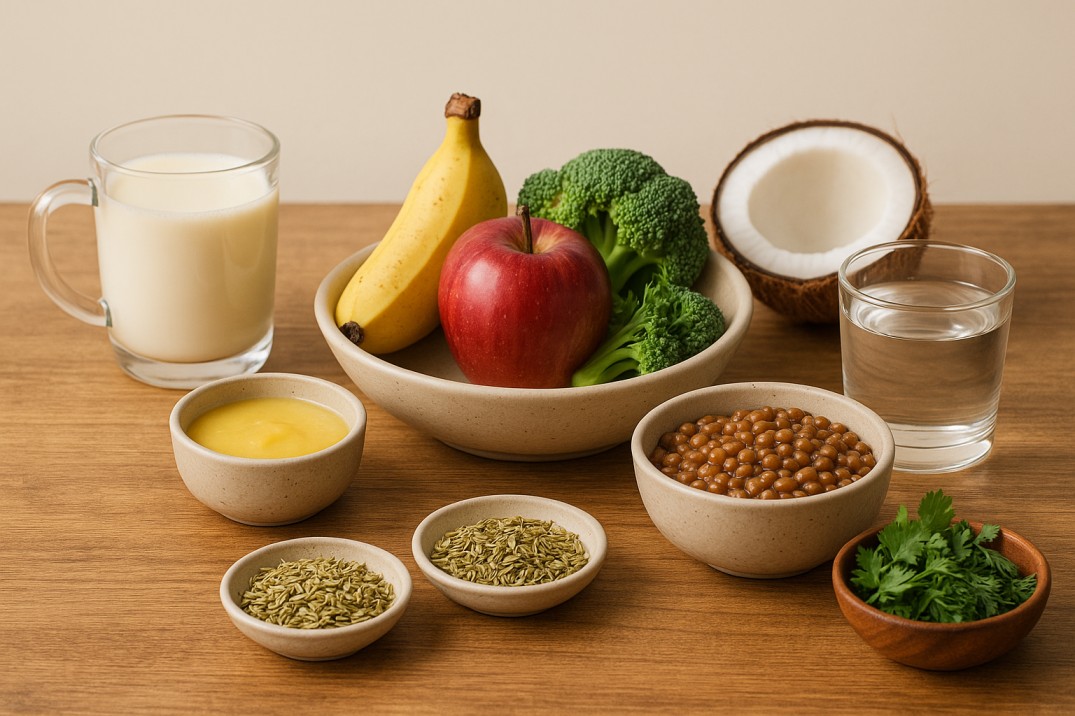
Feeding Two Lives: The Ayurvedic Way
Development of the fetus depends on the nutritious and balanced diet of the mother. As the fetus (baby) develops in the womb every month, the nutrition and food requirements become different. Ayurvedic specific comprehensive dietary guideline to be followed during pregnancy. It impact on the growth of fetus in the worm and at the same time ensure excellent health of the mother.
“Motherhood is not just a journey of pregnancy, but a woman becomes a mother when she shapes the conscience of the body.”
The food taken by a pregnant woman:
Nourishes and helps the healthy growth of the fetus, supporting proper development month by month.
Nourishes and strengthens the mother’s own body, giving her the energy and stability needed during pregnancy.
Nourishes the breasts to facilitate proper lactation, ensuring good milk flow and quality after delivery.

Follow a balanced eating plan to improve your wellbeing and that of your child. Follow simple steps and rules of Ayurvedic diet guide -
- Pregnant mother should drink bacteria free water after boiling for 15-20 mins
- Chandan can be mixed with boiling water
- Dipping a 24 carat gold or silver piece while boiling will give amazing results in development and health of the fetus.
- Coconut water, fennel or coriander seed water can be taken during the day time.
- Cow milk is good for pregnant woman
- Asparagus added boiled milk is the best for the pregnant mother.
- Milk should be fresh, unadulterated and should be consumed in lukewarm form.
- Medical Correction : Add dry ginger (1 pinch) in warm/ lukewarm milk, which can be consumed in case of gastric problems.
- Drink homemade, fresh and mild (non- spicy) buttermilk regularly during pregnancy.
- Add cumin powder and snedha namak (rock salt) for taste.
- Do not drink packed, salted or sweet lassi available in the market.
- Pure, fresh and homemade ghee is advised during pregnancy
- Homemade ghee from cow or buffalo milk is the best for consumption
- Daily, take one or two spoon of butter/ ghee with mishri or have 3-4 spoons of ghee with lunch and dinner,
- Medical Correction- In case of constipation, add 2-3 spoons of cow ghee in milk during bedtime.
- Lentils or pulses must be part of both morning and the evening meals in the form boiled, soup and sprouted.
- Green gram or split pigeon peas (toor dal) are a must have item.
- Soup of sprouted pulses.
- In raw salad lentils and pulses to be avoided
- Avoid split black lentils (urad dal), chickpeas, black chickpeas, kidney beans, field beans and soybean as they are difficult to digest.
- Take a good amount of rice, wheat and sorghum as they are easy to digest.
- Wheat is nutritious and it provides strength to bones and kills acidity
- Try to use flour made of a mixture of wheat, rice and various cereals as it is very nutritious
- Green leafy vegetables must be part of the daily diet of expectant mothers. Consume vegetables in the forms of soup, curry, salad or pulav.
- Eat bottle gourd, ridge gourd, potatoes, bitter gourd, pointed gourd, drumstick, cabbage, cauliflower, spinach, fenugreek, cucumber, beetroot, tomatoes, coriander and other vegetables.
- Eat carrot, radish, tindora, brinjal, lady’s finger, capsicum, and chillies carefully. These vegetables can increase body heat and cause indigestion.
- Prepare a salad of cucumber, beetroot, tomatoes, cabbage, coriander with lemon dressing.
- Cucumber and beetroot can be used in curd ratia.
- Avoid consuming purple yam, elephant yam, maize and mushrooms which are difficult to digest.
- Make food in ghee or less oil, instead of red chili powder and species use fresh coconut, sesame seeds, poppy seeds, coriander, cumin powder to make the food tasty.
- Minimize the use of garam masala in preparing vegetables and curries.
- Seasonal fruits must be part of your daily diet. Try to have at least two of these fruits daily: Apple, grapes, pomegranate, amala, orange, fig, sweet lime, ripen mangoes, coconuts. Moderately eat fruits like pear. Guava, custard, apple, chiku and jamun.
- If it’s grape season, have it daily. Eat 10-12 raisins when grapes are unavailable.
- Drinking coconut water daily to retain amniotic fluids and cream of green coconut is very nutritious.
- Use grated coconut in preparation of vegetables, dal or chutney.
- Limit the consumption of fruits like pineapple, strawberry, berries and wood apples.
- Never eat papaya during pregnancy and should not have milkshakes.
- Regular consumption of dry fig, walnut, apricot and dry dates. Take cashew and pistachios in limited quantities.
- Have 1 or 2 spoon of honey every day empty stomach in the morning
- Never heat honey or add it into boiling water
- Honey should be added to milk after it cools down to room temperature.
Pregnant women should avoid following dietary habits:
- Fasting and overeating
- Frequent and excessive eating
- Excess intake of dry, heavy to digest, fermented, spicy or hot food.
- Excessive intake of food of any one particular taste
- Leftover foods, uncooked leafy vegetables, undercooked beans, food with preservatives and artificial flavors.
- Use of alcohol, smoking, narcotics, sedatives and non prescribed drugs.