
Gout (Inflammatory Joint Disorder)
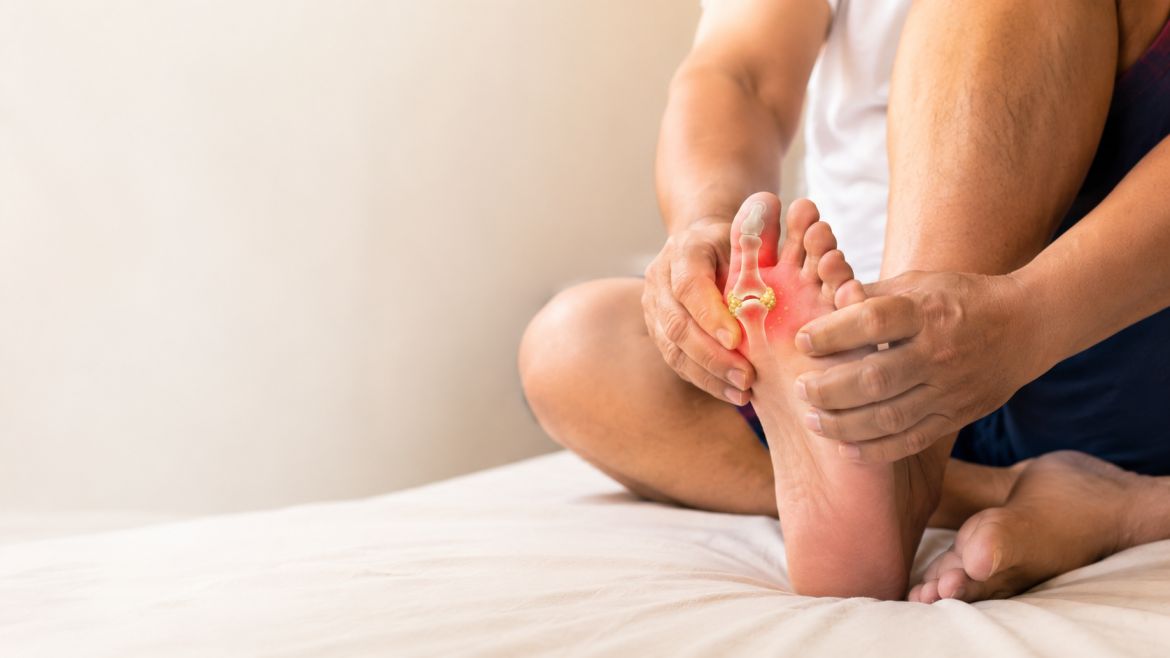
Gout is a form of inflammatory arthritis caused by the accumulation of uric acid crystals in the joints, leading to sudden, severe episodes of pain, swelling, redness, and tenderness. It most commonly affects the big toe, but can also involve the ankles, knees, wrists, and fingers.
Gout typically presents as recurrent attacks, often beginning suddenly—frequently at night—and can significantly affect mobility and quality of life if not properly managed.
Understanding Gout
Uric acid is a waste product formed from the breakdown of purines (substances found naturally in the body and in certain foods). Normally, uric acid dissolves in the blood and is excreted through urine.
However, when:
- The body produces excess uric acid, or
- The kidneys fail to eliminate it effectively
→ It leads to hyperuricemia (high uric acid levels), causing crystal deposition in joints and triggering inflammation.
Causes & Risk Factors
🔹 Dietary Factors
- High intake of purine-rich foods (red meat, seafood)
- Excess alcohol consumption
- Sugary beverages and processed foods
🔹 Medical & Lifestyle Factors
- Obesity and metabolic syndrome
- Kidney dysfunction
- Hypertension and diabetes
- Sedentary lifestyle
- Genetic predisposition
🔹 Triggering Factors
- Dehydration
- Sudden dietary changes
- Stress or illness
Symptoms
Gout has a characteristic presentation:
- Sudden onset of intense joint pain (often at night)• Swelling, redness, and warmth in the affected joint
- Extreme tenderness (even light touch can be painful)
- Limited joint movement
- Recurrent episodes with symptom-free intervals
In chronic cases, deposits called tophi may form around joints.
Ayurvedic Perspective
In Ayurveda, gout is correlated with Vatarakta, a disorder involving simultaneous aggravation of Vata Dosha and Rakta (blood tissue).
📌 Pathogenesis (Samprapti)
- Improper diet and lifestyle vitiate Rakta (blood)
- Aggravated Vata carries vitiated Rakta into joints
- This leads to inflammation, severe pain, and discoloration
Symptoms in Ayurveda
- Severe joint pain (especially in small joints)
- Burning sensation and redness
- Swelling and tenderness
- Discoloration of skin over joints
Ayurvedic Treatment Approach
The treatment focuses on detoxification, reducing inflammation, and balancing Vata and Rakta.
🔹 1. Shodhana Chikitsa (Detoxification)
- Virechana (Purgation Therapy):
Helps eliminate vitiated Pitta and Rakta toxins
- Raktamokshana (Bloodletting Therapy):
In selected cases, helps purify blood and reduce inflammation
- Basti Therapy:
Effective in controlling Vata and reducing joint pain
🔹 2. Shamana Chikitsa (Pacifying Treatment)
- Use of herbal formulations to reduce uric acid and inflammation
- Improve metabolism and prevent recurrence
🔹 3. Herbal Support
- Guduchi (Giloy): Anti-inflammatory and detoxifying
- Guggulu: Supports joint health and reduces swelling
- Manjistha: Purifies blood
- Triphala: Detoxifies and improves metabolism
- Neem: Helps in reducing inflammation and toxins
Diet & Lifestyle (Pathya-Apathya)
Recommended
- Light, easily digestible diet
- Plenty of water to flush out uric acid
- Fruits and vegetables
- Low-purine foods
To Avoid
- Red meat and seafood
- Alcohol and sugary drinks
- Fried and processed foods
- Excess salt and heavy meals
Lifestyle & Prevention
- Maintain healthy body weight
- Stay well hydrated
- Avoid prolonged fasting or overeating
- Engage in regular physical activity
- Manage stress effectively