Spondylosis – Advanced Integrative Care for Spine Health
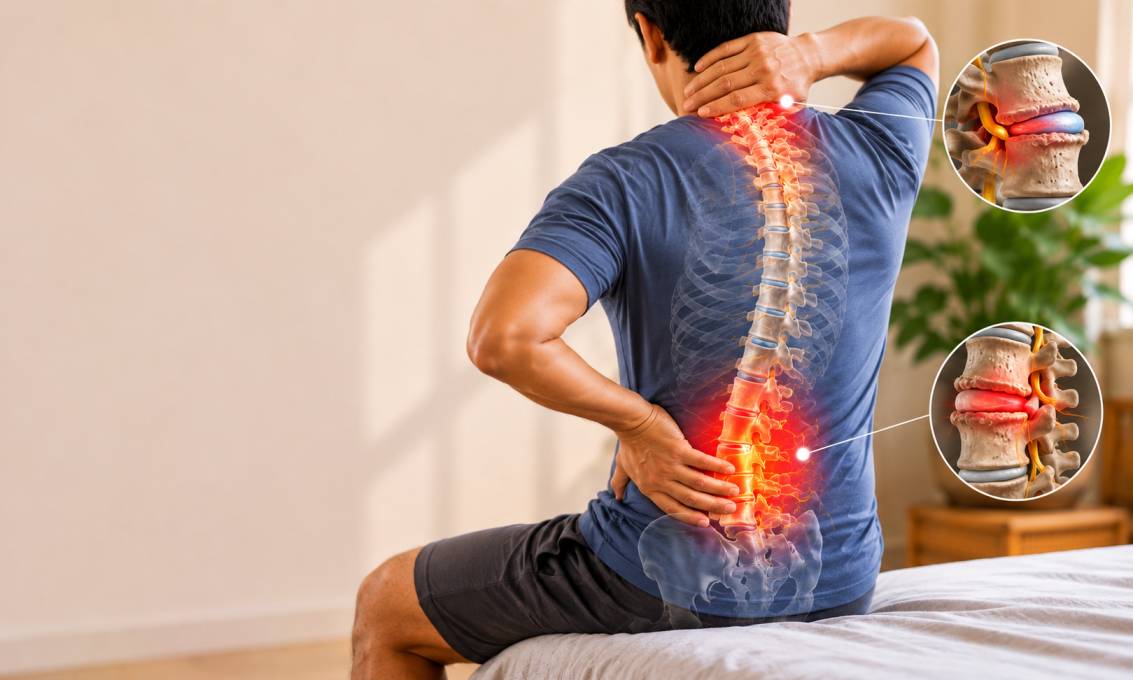
Spondylosis is a chronic, degenerative condition of the spine characterized by progressive wear and tear of the intervertebral discs, vertebrae, and supporting structures. It most commonly affects the cervical (neck) and lumbar (lower back) regions and is a major cause of long-term neck and back pain.
With modern lifestyle factors such as prolonged sitting, poor ergonomics, reduced physical activity, and excessive screen exposure, spondylosis is increasingly seen even in younger individuals.
Modern Medical Understanding of Spondylosis
Medically, spondylosis is a part of the natural aging process, but its progression can be accelerated by lifestyle and mechanical stress.
Pathophysiology (What Happens in the Spine)
- Disc Degeneration:
Intervertebral discs gradually lose water content and elasticity, reducing their shock-
absorbing capacity
- Disc Bulge / Herniation:
Weakened discs may protrude, leading to compression of nearby nerves
- Osteophyte Formation (Bone Spurs):
The body forms extra bone in response to degeneration, which may further restrict
movement or compress nerves
- Facet Joint Degeneration:
Wear and tear of spinal joints causes chronic localized pain and stiffness
- Nerve Compression:
Leads to radiating pain, numbness, tingling, or weakness in limbs
Types of Spondylosis
Cervical Spondylosis
Affects the neck region and is commonly associated with:
- Neck pain and stiffness
- Headaches (often from the back of the head)
- Shoulder and arm pain
- Tingling or numbness in hands
Lumbar Spondylosis
Affects the lower back and may present with:
- Chronic low back pain
- Stiffness and reduced flexibility
- Pain radiating to the legs (sciatica)
- Difficulty in prolonged sitting, standing, or walking
Symptoms of Spondylosis
- Persistent or intermittent neck/back pain
- Stiffness, especially after rest
- Reduced range of motion
- Radiating pain, tingling, or numbness
- Muscle weakness in advanced stages
- Postural imbalance and fatigue
Risk Factors
- Advancing age
- Sedentary lifestyle and lack of exercise
- Poor posture and improper ergonomics
- Long hours of desk work or mobile usage
- Obesity and weak core muscles
- Previous spinal injury or strain
Ayurvedic Perspective on Spondylosis
In Ayurveda, spondylosis is categorized under Vata Vyadhi, where aggravated Vata Dosha leads to degeneration (Dhatu Kshaya), dryness, and pain in spinal structures.
Ayurvedic Correlation
- Greeva Stambha – Cervical region stiffness and pain
- Kati Graha / Kati Shoola – Lumbar region disorders
In certain cases, the presence of Ama (metabolic toxins) further blocks channels (Srotas), intensifying pain, inflammation, and stiffness.
Ayurvedic Treatment Approach
Ayurveda provides a holistic, root-cause–based treatment aimed at reversing degeneration, relieving pain, and strengthening the spine.
- Shodhana (Detoxification)
- Basti (Medicated enema): The most effective therapy for Vata disorders, nourishing and strengthening the spine
- Virechana: Helps in detoxification and reducing inflammation
- Bahya Chikitsa (External Therapies)
- Abhyanga: Medicated oil massage to improve circulation and reduce stiffness
- Swedana: Herbal steam therapy to relieve muscle tightness
- Kati Basti / Greeva Basti: Targeted oil therapy for spinal nourishment• Patra Pinda Sweda: Herbal bolus therapy for pain relief and flexibility
- Internal Medications (Aushadhi)
Herbal formulations work at a deeper level to strengthen musculoskeletal tissues:
- Ashwagandha – Enhances strength and nerve health
- Guggulu – Anti-inflammatory and rejuvenative
- Dashamoola – Effective in reducing pain and inflammation
- Diet & Lifestyle (Pathya-Apathya)
- Avoid prolonged sitting and incorrect posture
- Practice regular stretching and yoga for spinal flexibility
- Consume warm, nourishing, and easily digestible food
- Avoid cold, dry, and processed foods
- Maintain proper ergonomics during work and sleep