
Sciatica (Radiating Nerve Pain)
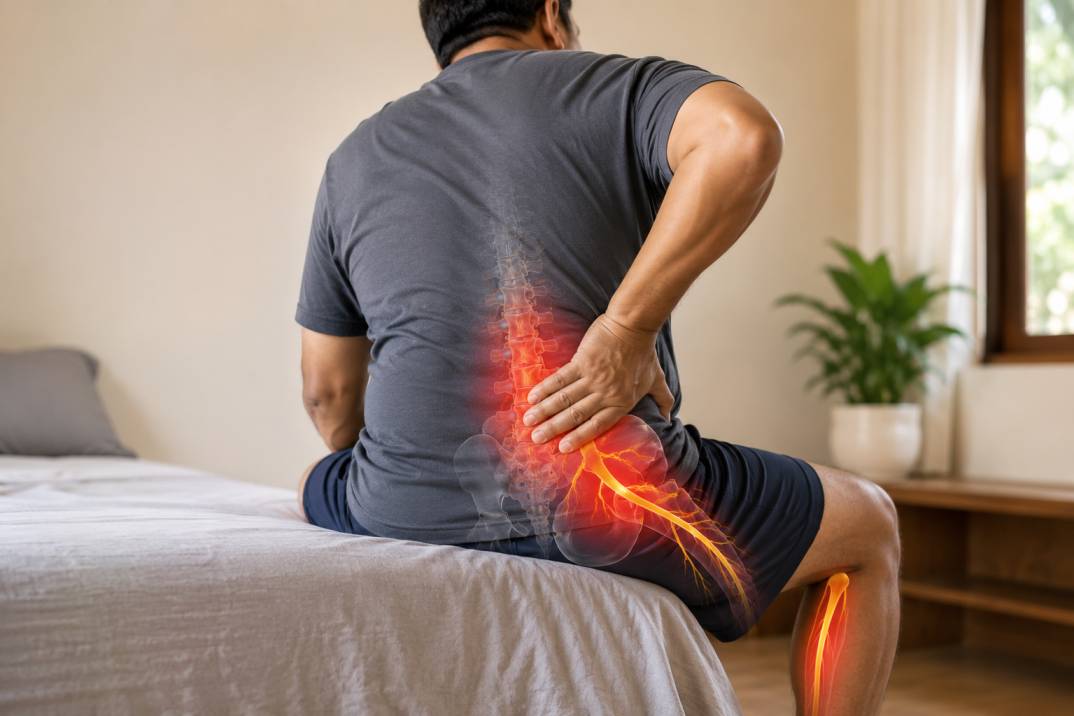
Sciatica is a clinical condition characterized by pain that originates in the lower back and radiates along the course of the sciatic nerve, typically affecting the buttock, thigh, calf, and sometimes extending up to the foot. It is not a disease in itself but a symptom of underlying pathology involving nerve compression or irritation in the lumbar spine.
The intensity of sciatica can vary from mild discomfort to severe, sharp, electric shock–like pain that can significantly restrict mobility, daily activities, and overall quality of life.
Understanding the Condition
The sciatic nerve is the largest and longest nerve in the human body, arising from nerve roots in the lumbar and sacral spine (L4–S3). It travels through the buttocks and down the back of each leg.
Sciatica occurs when this nerve or its roots become compressed, inflamed, or irritated due to various structural or functional causes.
Causes & Risk Factors
🔹 Structural Causes
- Intervertebral Disc Herniation (Slipped Disc):
The most common cause, where the disc bulges or ruptures and compresses nearby nerve
roots
- Lumbar Spondylosis:
Degenerative changes in the spine leading to narrowing of spaces (foramina)
- Spinal Stenosis:
Narrowing of the spinal canal causing nerve compression
- Piriformis Syndrome:
Tight or spasmodic piriformis muscle compressing the sciatic nerve
- Trauma or Injury:
Accidents, falls, or sports injuries
🔹 Lifestyle & Contributing Factors
- Prolonged sitting or desk jobs
- Poor posture and improper ergonomics
- Obesity increasing pressure on the spine
- Lack of physical activity
- Repetitive strain or heavy lifting
- Aging and degenerative spinal changes
Symptoms
Sciatica typically presents with a characteristic pattern:• Sharp, shooting, or burning pain radiating from lower back to leg
- Pain usually affecting one side of the body
- Tingling or “pins and needles” sensation
- Numbness in leg, foot, or toes
- Muscle weakness in the affected limb
- Pain aggravated by sitting, bending, coughing, or sneezing
- Difficulty in standing, walking, or maintaining posture
In severe cases, there may be significant nerve dysfunction requiring urgent attention.
Ayurvedic Perspective
In Ayurveda, sciatica is correlated with Gridhrasi, a disorder primarily caused by aggravation of Vata Dosha, sometimes associated with Kapha Dosha.
- Vata is responsible for nerve impulses and movement; its aggravation leads to pain (Ruk), pricking sensation (Toda), and radiating discomfort
- Kapha involvement may cause stiffness, heaviness, and obstruction in channels (Srotas)
The term Gridhrasi is derived from the patient’s gait resembling that of a vulture (Gridhra), due to difficulty in walking and altered posture.
Ayurvedic Treatment Approach
The goal of Ayurvedic management is to pacify Vata, relieve nerve compression, reduce
inflammation, and restore functional mobility.
🔹 1. External Therapies
- Abhyanga (Medicated Oil Massage):
Reduces muscle tightness, improves circulation, and nourishes nerves
- Kati Basti:
Localized retention of warm medicated oil over the lumbar region, providing deep tissue
nourishment and relief from nerve compression
- Pizhichil (Oil Bath Therapy):
Enhances lubrication of joints and reduces stiffness
- Patra Pinda Sweda (Herbal Bolus Therapy):
Helps relieve pain, inflammation, and muscle spasm
- Swedana (Fomentation Therapy):
Improves flexibility and reduces stiffness
🔹 2. Internal Management
- Herbal formulations such as:
◦ Dashmoola: Anti-inflammatory and Vata pacifying
◦ Guggulu preparations: Strengthen joints and reduce degeneration
◦ Ashwagandha: Supports nerve strength and muscle recovery• Basti Therapy (Medicated Enema):
Considered the most effective therapy for Vata disorders and a cornerstone treatment in
chronic sciatica
🔹 3. Rehabilitation & Supportive Care
- Physiotherapy to improve strength and flexibility
- Gentle yoga practices (Bhujangasana, Makarasana, Pavanamuktasana)
- Stretching exercises targeting lower back and hamstrings
- Postural correction and ergonomic adjustments